
Hanford Previous Residents Start with the Era
Each era answers to a different source. Parcel tools anchor the lot, deeds establish transfers, and directories name householders. Census pages add family structure. Some questions still send a Hanford researcher off the web and toward a counter, a library room, microfilm, or a written request, which is where much of this work ends up.
| Source | Years It Covers | Where Held | What It Shows |
|---|---|---|---|
| Kings Assessor and Parcel Viewer | Current tax year/map | Property tools | APN, situs, assessment, map book/page, year built, and parcel geography; no free owner search |
| Kings Recorder index and deeds | 1893 to present; exact index start unpublished | Counter, subscription, and microfilm | Grantor, grantee, document number, date, deed, and legal description |
| R. L. Polk reverse directories | Local editions 1948-1994; regional runs through 2000 | Kings County Library; Tulare fallback | Address-to-householder clues, names, spouses, occupations, and moves |
| Federal census | Through 1950; public after 72 years | NARA and library databases | Household members, relationships, occupations, and address clues |
| Hanford newspaper runs | 1889-2006, with the Sentinel label continuing | Kings County Library Digital Reel | Obituaries, marriages, notices, construction, and moves |
| Sanborn maps | 1885, 1888, 1891, 1892, 1898, 1905, 1913, 1925, 1950 | Library of Congress | Footprint, use, block, and street-number clues |
| EnerGov and city permits | Digital applications from December 2022; older scope unpublished | Hanford Citizen Self Service, Development Services, or City Clerk | Permit, inspection, applicant, contractor, and project history |
| Vital, probate, and cemetery records | County events; CDPH from July 1905; probate by case | Kings custodians, court, cemetery district, and library | Events, relationships, heirs, burial clues, and death notices |
Match the method to the address and the era. For a modern Hanford address, begin with a free address or APN search and record the parcel identifiers. For a past household, pick the nearest Polk and census years, then test them against newspaper, vital, probate, and deed evidence. A blank result means another custodian. It is not proof nobody lived there.
Why Hanford Deeds Stay Off the Web
Kings County's Assessor and Clerk-Recorder share the Government Center at 1400 W. Lacey Boulevard. The Clerk-Recorder answers at 559-852-2470, Monday through Friday, 8 a.m. to 5 p.m. Recording usually runs 8 a.m. to 3 p.m., with certificates and other requests until 4 p.m. Real-estate records are not public online. Public viewing happens in the access room, on microfilm. Paid Full Online Access adds the grantor/grantee index and document numbers. The images themselves stay on microfilm. Subscriptions need original signatures at the office, not fax, email, or upload. Activation normally takes three business days, billing is annual, and help is at 559-852-2485. Confirm the book range and copy charge before visiting.
Trace Hanford Previous Residents Through Deeds
Ownership anchors the search better than any other record. The free assessor route has a catch. It offers no public owner-name search. Use an address or APN result to identify the parcel, then request owner and transfer history from the assessor counter or the subscriber system. Carry the legal description and APN to the Recorder instead of trusting a street number that may have changed.
- Search the Hanford address in Megabyte or Parcel Viewer. Record APN, situs, map book/page, and legal geography.
- Ask the assessor counter or Full Online Access for current owner, transfer history, characteristics, and legal description.
- Search the owner as grantee in the Recorder index, then retrieve the deed by document number on office microfilm.
- Copy grantor, grantee, recording date, APN or situs, document number, and legal description.
- Search the seller as grantee for the earlier deed and repeat with each prior seller.
- Continue to the 1893 formation line; move earlier land work to Tulare County.
- Grantor / grantee
- The grantor transfers an interest; the grantee receives it. In a purchase deed, they are usually seller and buyer.
- Chain of title
- The linked sequence of recorded transfers from a current titleholder to earlier titleholders.
- Legal description
- The lot, block, subdivision, township, range, or other land description that outlasts an old street number.
- Criss-cross directory
- A reverse directory arranged by address or street, moving from house number to householder.
- Enumeration district
- A census area assigned to an enumerator that can locate a block when spelling or numbering differs.
Hanford's 1893 Boundary and Older Records
Kings County took shape in 1893, carved from Tulare County with Hanford as its seat. That matters for a resident lookup. A deed, probate file, or family name tied to land before that year belongs to an earlier era. It may still sit in Tulare County's records. Fresno County entered the picture in 1909. A 118-square-mile triangular transfer shifted ground near an old boundary line. Property there may carry a Fresno paper trail worth checking.
Hanford's early fires reshaped downtown and its address clues. Town lots first sold on January 17, 1877. Two blazes changed the street grid. One came on July 12, 1887, and the second on June 19, 1891. The second fire pushed residents toward incorporation. Articles were filed August 12, 1891 after a 127-47 vote. No official source claims county books burned, so treat a deed gap as unlikely. The Clerk of the Board keeps original volumes from 1893 through 1977. That is a long run for any residents directory search.
Note: A Hanford name or address predating county formation belongs under the predecessor county. Don't call a missing Kings index a dead end.
Hanford Polk Books and Past Households
Kings County Library holds verified Hanford, Corcoran, and Lemoore Polk editions for 1948, 1953, 1958, 1963, 1969, 1974, 1981, 1986, 1991, and 1994, plus regional runs for 1997, 1999, and 2000. The Hanford Branch sits temporarily at 110 S. 11th Avenue. Call 559-852-4001 before requesting shelves. Reopening is scheduled for early 2027.
Polk books work in two directions. The street guide moves from house number to householder. The alphabetical section may add a spouse, occupation, employer, or an owner/renter mark. Abbreviations matter here. Check the h, r, emp, wid, and rem entries in that volume's own key.
A local shelf is not the only route. Tulare Public Library's Genealogy Room holds documented regional editions. The California State Library directory database and library subscription images can fill a gap. The Hanford city directories page describes the full collection, and this trail only needs the volumes that match the years in question.
Pair Hanford Previous Residents with Census Years
Directories give a named address clue. Census schedules add the household around it. Pair the 1948 or 1953 Polk book with the public 1950 census, then compare other editions. A first appearance brackets arrival and a disappearance brackets departure, but neither proves the move date, and a deed may show ownership where a directory or census shows occupancy.
- Choose the closest Polk edition and write down street spelling, house number, householder, and any cross-reference.
- Switch to the alphabetical section and copy the full entry, including spouse, occupation, address, and h, r, or rem marks.
- Locate the same block in the 1950 census or another released census year, using the enumeration district when needed.
- Compare names, relationships, occupation clues, and address form, not a surname alone.
- Test the household against the next directory, a newspaper notice, a deed, and a vital or probate record.
Newspapers catch what directories miss. Kings County Library's Digital Reel is in-library and includes overlapping Hanford Journal and Sentinel mastheads from 1889 through 2006. Search every title. An obituary, marriage notice, or address change often hides in the second paper checked, and library staff, the Hanford FamilySearch Center, and the California State Library serve as fallback channels.
Hanford Sanborn Sheets for House History
Sanborn fire-insurance sheets give Hanford house historians a way to test a building. They sit between the deed and the directory. Hanford catalog entries list editions from 1885, 1888, 1891, 1892, 1898, 1905, 1913, 1925, and 1950. The Library of Congress posts the February 1888 set as three public-domain sheets. High-resolution downloads and a IIIF manifest come with it. Later sheets carry different access limits.
Match the street, block, number, footprint, and labeled use on a sheet against parcel data. Then check that against residents directory evidence. A footprint that changes can signal a rebuild. A house number that shifts can explain why a past residents search missed a household. Sanborn dates structures and uses, though. It does not date occupants, owners, or a full roster of who lived there.
Note: A Sanborn footprint proves a building existed. It never proves who called it home.
Hanford Permits, GIS, and Address Changes
Pair the assessor with GIS before any name request. Megabyte accepts a fee parcel, an assessment, or a street address. It also takes a boat CF number or an aircraft tail number. For addresses it prefers partial searches. It drops suffixes like Street or Lane. It also abbreviates directions as N, E, S, or W. Parcel Viewer takes a partial address or APN. It offers up to six suggestions and zooms to roughly 1:1500.
| Tool | Field label | Required | Search behavior and result |
|---|---|---|---|
| Megabyte assessment | SEARCH BY | Yes | FEE PARCEL is the default; other choices are ASSESSMENT, STREET ADDRESS, BOAT CF#, and AIRCRAFT TAIL#. |
| Megabyte assessment | Dynamic search value | Yes | Two to 20 characters; omit the street suffix and use a direction when present. |
| Kings Parcel Viewer | ADDRESS | Optional query source | Partial matches, up to six suggestions, parcel zoom, and address-linked geometry. |
| Kings Parcel Viewer | APN | Optional query source | Partial APN search; popup fields include map book/page, acreage, rooms, year built, districts, zoning, flood, and school data. |
Neither free route returns an owner. It also skips a taxpayer mailing address, a deed image, or a ZIP-wide list of past residents. ParcelQuest Lite adds limited free maps. Fuller context comes from Full Online Access or a visit to the assessor counter. EnerGov holds digital planning applications from December 2022 forward; earlier permit coverage is unpublished. So Development Services at 559-852-2581, Planning at 559-585-2580, or a focused City Clerk request fills the gap.
Annexation matters for address continuity. Hanford materials note county-style addresses usually run five digits. City-style addresses run four, while the ZIP code often holds steady. Save both forms. Tie them together with the APN, lot and block, or legal description. Parcel Viewer stays informational rather than a legal survey. The APN never replaces the land description.
Hanford Previous Residents at the Trail's End
A former Hanford owner or occupant has died. An obituary, a vital record, and a probate file form the strongest closing trail. Kings County holds births and deaths recorded in the county. It also holds marriages licensed there, with counter and mail service. The county quotes 3-5 business days. CDPH keeps statewide records from July 1905, takes mailed applications, and averages 4-6 weeks.
California splits copies into authorized and informational rather than applying a simple age rule. An informational copy can confirm an event. Yet it carries a marking that invalidates it for identity. Confidential marriage and sealed adoption records carry separate limits. Read the copy guidance whenever a Hanford previous-residents search touches a death or family tie.
The California authorized and informational copy guidance page lays out the eligibility split. Pick a request route after that:
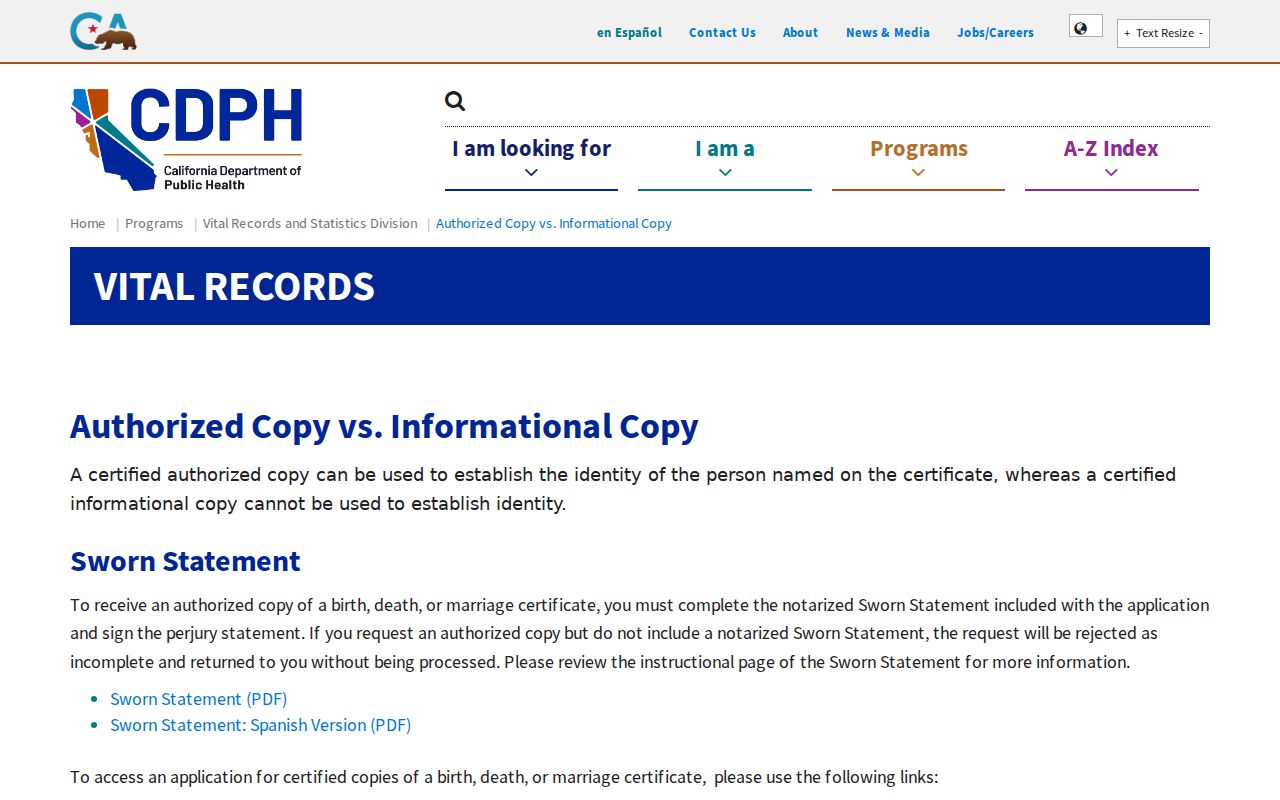
That eligibility split explains why a certificate request can demand proof of standing. The obituary itself may still be easy to find. Probate sits with Kings Superior Court. A case search, a terminal, or a written request there can name heirs. The Hanford Cemetery District publishes no official name database. Contact it with a decedent name and an approximate death year, then pair the answer with obituary, death, and probate records.
For a birth request, the CDPH VS 111 application carries the form and sworn-statement route. Before mailing anything, check the current CDPH fee schedule and the processing estimates. The county registrars and recorders guidance sorts out which office does what. It separates the local registrar from the recorder and the courts.
Before July 1905, turn to county registers, churches, cemeteries, and newspapers. The Kings County Library, the State Library or Archives, and the Hanford FamilySearch Center also help. Any of these can close a family story. None of them replaces a deed or a court file.
Hanford Past Households and Lawful House History
Previous residents belong to a house-history question, not a complete resident list. Owners can be absent. Occupants may be renters or boarders. Protected addresses may never surface at all. So compare two independent sources, note the date each one speaks to, and ask the custodian directly whenever a name or address conflicts.
House-history limit. Hanford address research is appropriate for family history, local history, estate work, and personal curiosity. Do not use a record to stalk, harass, track, or harm a living person.
A careful trail keeps its uncertainty in view. Hold the APN, legal description, old and new address forms, directory citation, census year, newspaper title, deed number, and custodian together in one record. That discipline separates past residents who merely occupied a parcel from the people who actually held title.